Labels

Showing posts with label Indn 212. Show all posts

Tuesday, 24 September 2013

INDN 212: The proposal

Here we have the first layout of the system that will be used, which allows for all items to be worn alone or together while not doubling up on each other to cause friction and be uncomfortable.


The idea behind it is to find each necessary part of each object its own part of the head and to cut down on all the unnecessary parts. For instance the top strap for things that go on the front of the face can clip onto the back of the helmet or anything else that goes on the head, however it can still be used in its conventional way if there isn't anything on the top of the head for it to clip onto. The strap for any goggles that might go on is completely removed because they will always have the opportunity to clip onto the base of something that goes round the front of the face or the roof of whatever is going on the head. There was no design I could come up with that would beat regular old glasses if neither of these things were present for the goggles to clip onto though.

This is an example of the full construction set-up, with the hard hat, earmuffs, respirator,and goggles all attached to each other.

This shows the getup of a painter and how the the goggles need to clip onto something else to free up more space.


This shows how other elements can be introduced to allow the modular system to work for different people in different situations, this is a possible example of a fire-fighter and how the respirator can be swapped out for a gas mask.


I also realised that this system can apply to so many things that to limit it just to trades wouldn't be pushing it far enough, and so I started thinking about recreational activities that could use this system. These two images are examples of that, the first is an example of how a diver could use the system and the second shows how with enough different parts that fit into the system people could use them for lots of different things, this is a paintball mask. Other possible examples could include a motorcycle helmet or a bee keepers mask.


Monday, 23 September 2013

INDN 212 Project 2: The Plan

My intention with this project is to create a solution for the head real estate problem, I want to create a system that makes all of the equipment used in these situations modular so that they can all be used in tandem with each other easily, but most importantly they can all be used at the same time with no problem. Its also important that the range of usable equipment isn't limited to just one profession or trade, so the goggles and helmet could be swapped out for a welders mask, or the respirator for a fireman's gas mask.

The system of how this will work is the most important part of the design, there needs to be a standardised size and shape for every part of the face affected.

Sunday, 22 September 2013

INDN 212: Project 2 description and the problem

This is a big project: group work, should be interesting. The idea is that we need to find a safety problem, whether it be around the house, in an everyday object or in any imaginable everyday situation and design a solution for it "Design for the real world".

This has led me to discussions with a young gentleman named Patrick


Patrick is a plumber.

He is also a very dear friend of mine, and being a very good friend of mine I would like it if I was able to keep him safe in his work environment. One of the biggest issues that has become apparent in his area of work is the large amount of safety equipment that they have wear on and around construction sites and under houses (two places that plumbers tend to spent a large amount of time). While rules have been put in place in regards to the necessity of certain items of safety gear such as hard hats, goggles and ear muffs by OSH there has been a severe oversight in regards to one very important factor involving all of these items of safety gear: real estate.

There are so many items of headgear to wear on the job as a tradesman that by the time you are wearing a hard hat, a mask, a pair of gaggles or glasses AND a pair of ear-muffs it can be quite uncomfortable, especially around the ears.

This results in people not wearing all of their safety gear, forgoing a pair of earmuffs or their goggles in order to be more comfortable. This often causes hearing or sight problems further down the line.

Saturday, 14 September 2013

Friday, 13 September 2013

INDN 212: 3D Printing Process

The main part of my model (the part that isn't circuits and LEDs) is 3D printed, this is a process that I have been using as often as I can at University. I beleive that a  deep understandin of how to get the best out of these machines wil help me in the future, weather that be finding a design related job or just in my own personal life.


The potential of these machines is stagering, they allow you the chance to make the most efficently performing and eff designed product because there are none of the limitations braught about from craft, only your skill with whatever CAD program you are using. The Machine takes care of the rest.


INDN 212: The Planned Uncanny

I have developed what I think is a solid aesthetic direction for the light: a planned uncanniness.
The Uncanny is a word used to describe something that is slightly alien or foreign but still very similar to real life. I would like to carry this idea through my design because my object is quite uncanny, it is something that is trying to add a feature to the human body, something natural and organic, in a really mechanical and invasive way.

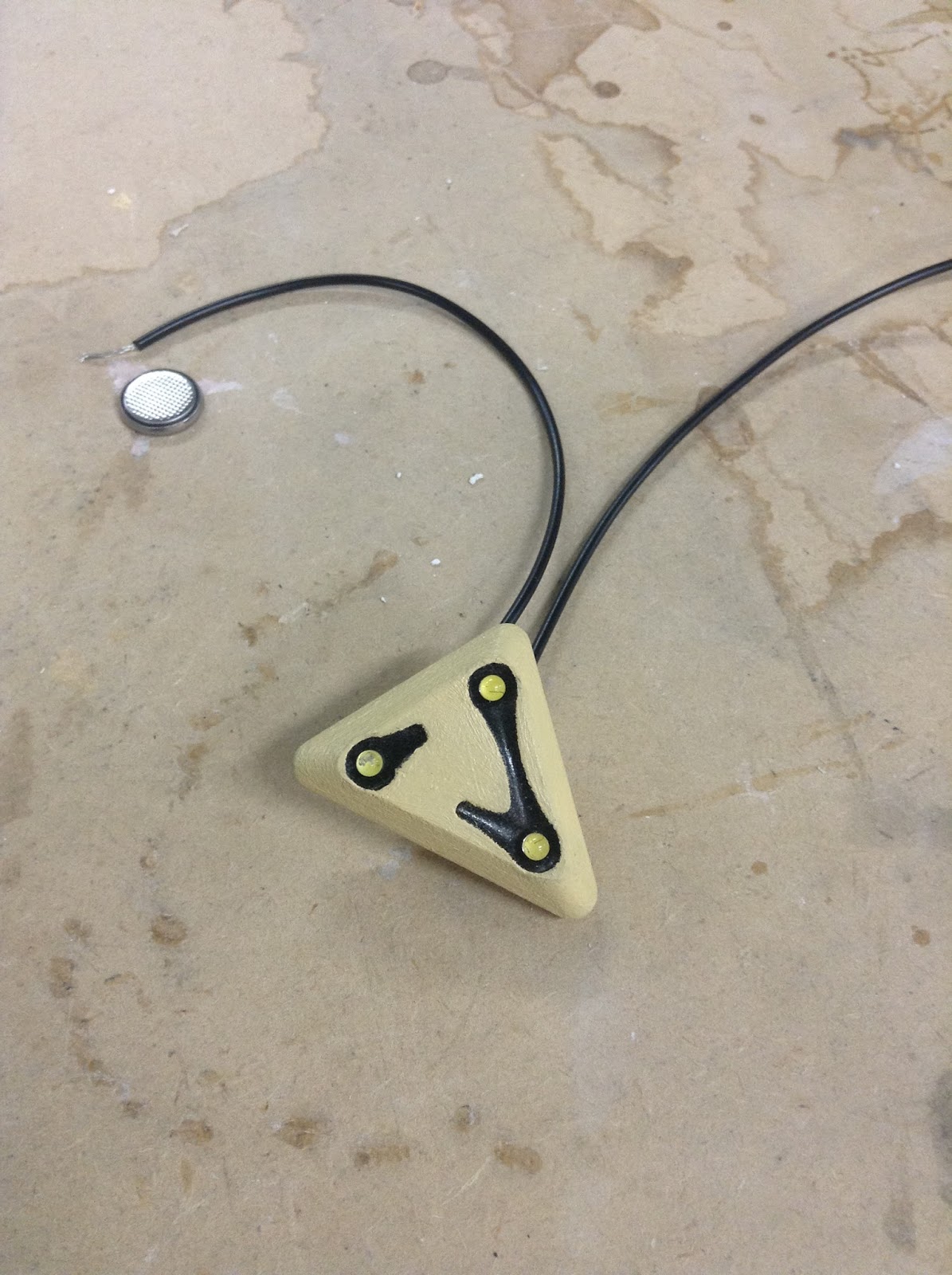
Originally it was planned to have it metallized in silver and have it become a very pretty object of desire, but I decided that the object should be more subtle. This decision was made because this object is very permanent and so I felt it shouldn't be what could be thought of as over the top. Instead it is something that looks almost organic and fits into the little gap between your collarbone, trapezius muscle and neck.


The three lights represent the two halves of the heart and the veins of the cardiovascular system and the black lines are there for several reasons. The first is that they make the model look almost like you have circuits running through part of you, as the main body of the implant is skin coloured. The second is that they mimic the way that blood flows through he whole system, the right side of the heart pumps blood to your lungs and then too the left half of the heart, a small task compared to what the left side does. The left side pumps blood ALL the way around your body, from the tips of your fingers to your toes.


This part represents the part that would go under the skin of your neck and actually measure your pulse, while then sending it back to the main part do be displayed by lights. It has a "removable" top because every now and again things might stop working or need a new battery. Getting an operation each time this happens seams unnecessary. The black is just there so make it easier to remove when i needs to be and to give it a slightly more 'industrial' look.

Saturday, 7 September 2013

INDN 212: SCIENCE!!!!

Further research into creating something that will read your pulse has shown to be difficult and has made me realize something. I am not an engineer and I have no idea how to create something like this, it would take up too much time and distract from the point of the assignment: design a light. So I am going to design a light with the idea that I will code an Arduino Unit to pulsate and create the illusion that it is a persons heart.

While this is unfortunate in that I wont be able to have something that actually works, rather a representation.

INDN 212: First model

The first model I designed that I actually want to make is this circular one, its small and can be placed into the body at any angle the wearer wants.


The reason the left side is larger than the right is because the left side of the heart has to pump your blood all the way around your body, as opposed to the right which inly goes through the lungs and then across to the left size

Sunday, 25 August 2013

INDN 212: Form

I have decided to go with the idea of a model that measures your heart rate: Because this thing is so small and the shape is completely up to me, it needs to be perfect. The form has to be link back to the original themes/ideas/concepts that drive the design, things like the body and expanding its abilities and the heard and cardiovascular system (try and find an aesthetic direction from that!?)

The first ideas looked at the shape of the hexagon and how the lights would be incorporated onto the form of it with circles. Even though it is very geometric, the hexagon reoccurs in nature quite allot, bees obviously come to mind, but there are also rock formations and snow flake patterns that are hexagon shaped.


The ideas need further development from here but they are a solid start.

Sunday, 18 August 2013

INDN 212 Project 2: feasability

I found an article on forbes.com  about the implementation of RFID chips in peoples hands, which proves that putting tech in people is not only feasible but could also be quite easy. If I could find a way to streamline the implementation it could make it alot more accessible to people and also less of a painful ordeal.


hmmmmmmmmm more food for though.

Friday, 16 August 2013

INDN 212 Project 2: Research and ideas

I have been doing alot of research into body modifications like subdermal and transdermal implants for ideas on how implanting things in the skin will work. I've been learning about the types of metals that the body is more likely to accept (there is always a risk of rejection with this stuff).

I have come up with two ideas so far that I would like to work on;

1. Heart moniter
I thought of the idea of having a small light in your arm that would light up to the beat of your pulse, I looked at these sports watches and how they read athletes pulses, I don't think it would be too hard to gut one of them and reverse engineer it to work with a simple LED under the skin. The focus of this idea is just to have a constantly available reference for your pulse instead of having to read it with your fingers, plus having a constantly blipping light that you knew represented your pulse would probably be quite soothing. It would obviously need some kind of battery cap thing so that the battery could be replaced, bu that could be in the form of a transdermal part with a removable cap.

2. USB storage
Another idea was that I could implant a USB under my skin, I have the horrible ability to be able to loose nearly portable storage device I get, but if I had it implanted in myself then I wouldn't have to worry about that. This would have to be an entirely transdermal device and it would mean that I would need to have a plug in my arm and carry a USB cable around with me at nearly all times, but unless I could come up with some kind of very compact cord that could unwind?
Wheres the light? well when USB devices are being accessed by a computer they usually have a fashing light to reassure the person that they are indeed working. Yes the idea is a little bit shallow but it needs more development and exploration, but that's the intention.

These ideas are still very young and need more exploration, but they are a start.

Thursday, 15 August 2013

INDN 212 Project 2: Implants and their relation to the project

My project is going to revolve around the idea of functional subdermal and transdermal implants. I will give a quick definition of them here;

Subdermal implants are implants that are placed under the skin (dermis) entirely covered by the skin, their main use today is in the Norplant contraception implant which is a series of bars placed under the skin in the upper arm in women. However they have formed a bit of a more devious reputation in the underground body modification scene; people have gotten silicon molds of certain shapes surgically implanted under their skin. After it is completely healed the person has that shape protruding from the surface of their skin. The problem with these more drastic aesthetic modifications is that the people who perform the operations are not licensed to use anesthetics and so the only relief you can before they cut you open is a bucket of ice if your lucky.


Transdermal implants are implants that go underneath the skin but are also on the outside aswell. One of the most interesting uses for them: Pierced Glasses by James Sooy and Oliver Gibson where they pierced a bar into the skin in their noses. This then gives them a frame from which to hang the lenses of a pair of glasses, meaning that you will have a persistent pair of removable glasses (they can un-clip from the bar in the nose), but that will not fall off.

                                                                                                                                                                                                                                                                                                                                     
However these do have a similar underground group like the subdermal implants, some people get "horns" inplanted in their skulls. There are still issues with this though in that there are no qualified surgeons willing to do the procedure, so your stuck with another bucket of ice.


WHY!?
I decided to go with implants and the idea of body modification because it is something that I find incredibly fascinating and an idea that hasn't really been pushed far enough in my opinion, but also because of its potential to create a very strong project. When you start working with the human body there is the potential for so many different outputs and inputs, for so many different responses as the brief says. When working with peoples skin and body there is the potential to add whole other ranges of senses that people have never even though a human could experience before, just look at the example of people implanting small magnets in their fingers. It gives them the ability to feel electrical fields through proximity, once a sense restricted to some fish and eels this is now something that humans can experience aswell (something incredibly relevant to our digital age).

I want to explore the idea of adding depth and functionality to the human body itself, not just the things that we surround it with.

Monday, 12 August 2013

INDN 212 Project 2: Ideas

One thing that I find incredibly fascinating is the idea of functional body modification. The idea that the body is a blank canvas is one that many people believe and is becoming more and more socially acceptable as things like tattoos and piercings enter "mainstream" society. But for me it still feels a little bit shallow, there is so much potential to add functions or abilities to the body with body modifications, but for the most part people have just stuck to aesthetics until very recently. Right now you can get tiny magnets placed under the skin in your fingers that give you the ability to "feel" electric feilds and there is also research going on to allow UV "nano-tattoos" to allow doctors to glean an insight into how your body is functioning.

There is so much potential to add or modify the functions of the body and so that is what I am planning on doing with this assignment, and before you start wondering the answer is yes: I am fully prepared to get this modification for myself.

After all, who knows how far it could go?


Sunday, 11 August 2013

Well crap

Literally moments before taking photos, when the model was fully complete this happened:


I dropped it.

Initially I was going to try and fix it, but glueing this together would make it look like Frankenstein's monster. There's not much left to do but talk about it, so that's what I'm going to do.

Next time:
On rebuilding this object I would make it stronger. There is a problem with some of the parts in at they are very thin, this is what led to some parts being broken and is something that needs to be fixed. Obviously only to a certain extent as this is a necklace and something that is to be valued so there is no point making it incredibly durable. Maybe making it out of rubber would be a good idea? Though that doesn't really help the idea that is valuable though, something like stainless Steel or silver would be a better idea.

Also I won't drop it next time

Wednesday, 24 July 2013

Ideas again

Ok so the second idea has popped into my head, a necklace... Kinda.

A necklace that emits light is the main premise of the idea, but it's not going to be some tacky $2 shop  glow in the dark gummy necklace. The necklace itself will be made out of a completely opaque high quality plastic so that no light can escape from the front of the object, anyone viewing it would think it is just a nice plastic necklace. However holes along the sides of the object will allow light out (emitted by the LED in the centre) in very controlled patterns, casting light and shadows over the chest of the wearer. This turns the human body into a surface for display and light into ornamentation.


This design is going down a much more sculptural/jewellery path compared to the last idea. 

Monday, 22 July 2013

Idea: issues

After talking with my lecturer about my project he pointed out something important about my design, it's cheap. If put into mass production my object wouldn't be very expensive, most likely under $10, and that's a problem.

If it breaks no ones going to be particularly upset, there is going to be very little attachment to my object because there isn't really a reason to. People get attached to things hat they are invested in, and since my object isn't going to be very expensive or need to look particularly elegant there is very little chance that the user would actually get particularly attached to the object.

I also realised that there is already an object that allows people to use their hands to do tasks hands freed but still keep things nice and illuminated, it's called a head lamp.

Sunday, 21 July 2013

Ideas

So this is my first idea, a bracelet... Kinda.
I figured that the best way to improve the uses of this device is to remove the need for it to be taking up one of your hands while in use. I came up with a way for the light to go around your wrist, illuminating whatever you might have in your hand but at the same time still giving you complete freedom of movement with all of your digits.


I've given it a way to rotate as well, giving the user more freedom to direct the light, after all if you doing something like using a screwdriver the focus of what you are looking at isn't going to be in the palm of your hand.

Saturday, 20 July 2013

Light in use

This is the white light in action, turns out its actually pretty damn bright

Wednesday, 17 July 2013

Deconstruction

Here is a full analysis of the parts in my purchases light.


The light is Chinese manufactured and consists of seven parts all together (not including the batteries) most made of a clear plastic, which allows you to see into the object, displaying the circuitry and batteries. It is made in China and the main body case can come apart just by inserting a finger nail in between the two halves, which speaks quite allot about the quality of the construction. The rest comes apart after removing two tiny screws, exposing the main circuit board and the white LED. The device is shaped mainly to fit around the circuit board, obviously trying to keep the entire thing as small as possible. There is very little ergonomic design apart from a tiny grove on one side for the index finger while holding the light, though this doesn't seem to be to much of an issue as it is so light.

Tuesday, 16 July 2013

DSDN 212 Project 1

Project 1: Redesign
Our first project for DSDN 212 is to redesign a lighting device; any kind of lighting device. 

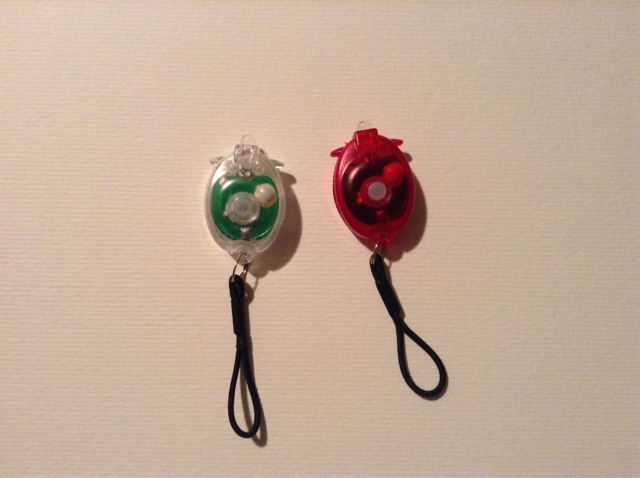
I chose these lanyard lights, one white and one red, which I bought from Wisebuys, a cheap knockoff store here in Wellington. They cost 4.50 each and are pretty cheaply made so I'm going to need to find a way to remedy that, making them something that has some sense of value. They're made to attach to keychains or bags for everyday use but I'm going to try and find a way to give them more uses, or at least ad depth to their current use.